

Enhanced Data Synchronisation
CRM-ERP integrations facilitate seamless data sharing between platforms, ensuring consistency and reducing the likelihood of errors by synchronising customer information across all systems.

CRM-adjacent integrations, particularly involving ERP systems, streamline business processes by connecting customer relationship management with enterprise resource planning. This integration ensures seamless data flow between systems, reducing duplicate entries and enhancing data accuracy. Common types involve synchronising customer data, automating order processing, and aligning sales with inventory management. Professional customised solutions can optimise these processes, fostering enhanced business performance and growth.
Talk to our teamCRM-adjacent integrations, especially those involving ERP systems, play a critical role in enhancing business operations by bridging the gap between customer relationship management and enterprise resource planning. These integrations streamline the flow of information across various organisational modules, significantly reducing data redundancy and ensuring higher accuracy. By connecting these systems, businesses can synchronise customer data, automate order processing procedures, and efficiently coordinate sales activities with inventory management. This harmonisation of systems is particularly advantageous for companies aiming to maintain a seamless operational workflow.
Common types of CRM and ERP integrations include synchronisation of contact and order details, alignment of financial data for accounting purposes, and automation of routine tasks such as invoicing and inventory updates. When implemented correctly, these integrations facilitate improved decision-making processes, enhance customer service, and provide valuable insights into consumer behaviour. Organisations considering these integrations should evaluate factors such as compatibility with existing systems, scalability, and the potential for customisation, ensuring that the solution aligns with their specific operational needs and strategic objectives.
CRM-ERP integrations facilitate seamless data sharing between platforms, ensuring consistency and reducing the likelihood of errors by synchronising customer information across all systems.

Automating the order processing pipeline through CRM-ERP integration removes manual input, accelerating order fulfilment and improving accuracy to boost customer satisfaction.

Integrating CRM with ERP systems aligns sales data with inventory levels, enabling real-time stock updates and preventing overstock or stockouts through dynamic inventory management.

Synchronise financial data effortlessly with CRM-ERP integration, which supports accurate financial reporting and accounting, providing transparency and aiding strategic planning.

Access integrated data insights to make data-driven decisions, leveraging comprehensive reports and analytics facilitated by CRM-ERP systems for strategic growth.
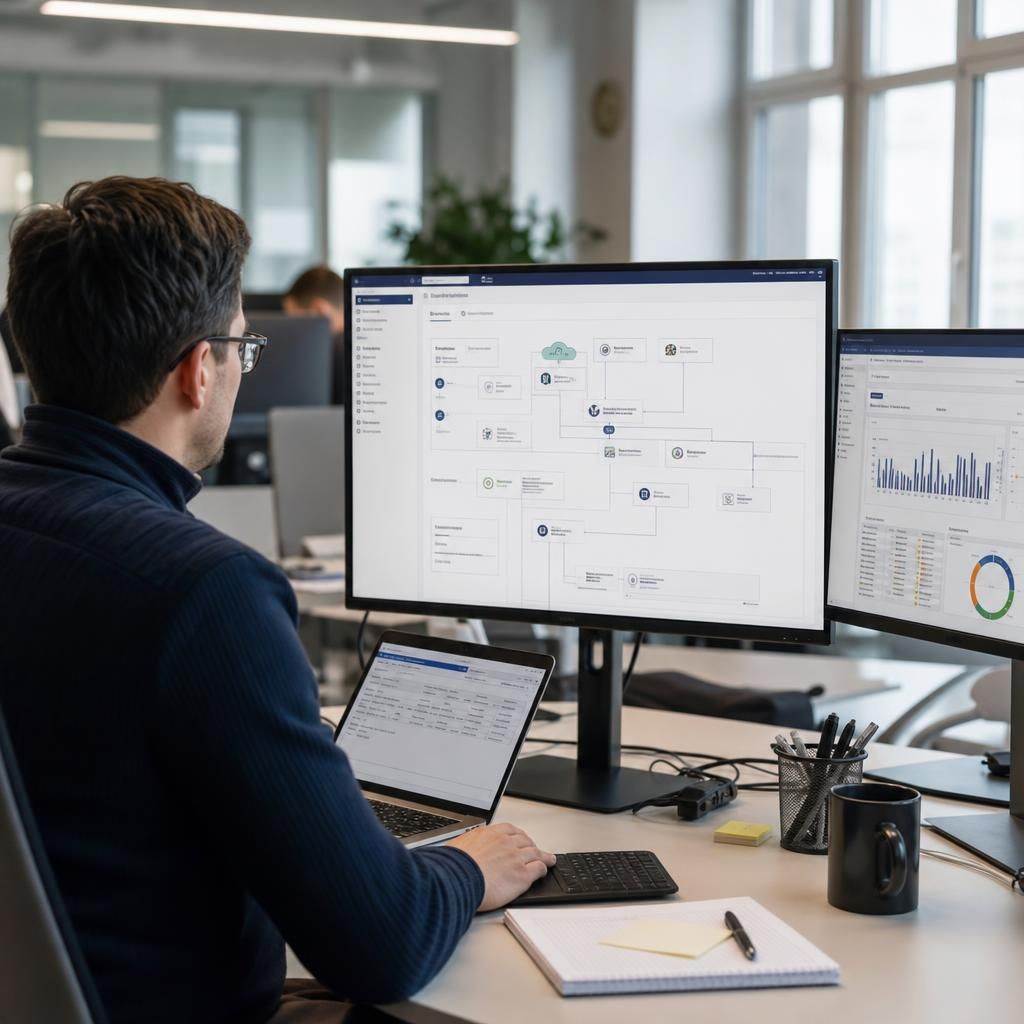
Reduce repetitive tasks and enhance team productivity by automating routine processes, thanks to the seamless connectivity between CRM and ERP systems.
CRM-adjacent integrations with ERP systems are essential for businesses aiming to streamline their operations by unifying Customer Relationship Management (CRM) and Enterprise Resource Planning (ERP). This synergy allows for improved data accuracy and reduces redundant data entry across platforms, facilitating a seamless flow of information between sales, customer service, and accounting departments. By aligning various organisational functions, CRM and ERP integrations enhance decision-making processes and operational efficiency.
Common integrations between CRM and ERP systems involve synchronising customer and financial data, automating order processing, and enhancing inventory management. These integrations enable businesses to automate routine tasks such as invoicing and updating stock levels, leading to reduced manual errors and faster processing times. By integrating customer service platforms with ERP systems, companies can gain better insights into customer behaviour, leading to more personalised service and improved client satisfaction.
When considering CRM-adjacent integrations with ERP systems, businesses should evaluate the compatibility with existing infrastructure, as well as the scalability and flexibility of the integration solutions. Customised integration solutions are often preferred for aligning with specific operational needs and strategic objectives. Moreover, the adoption of these integrations can facilitate improved collaboration among teams, providing a comprehensive view of business operations and contributing to intelligent growth strategies.

CRM-adjacent integrations with ERP systems facilitate the seamless exchange of data between Customer Relationship Management and Enterprise Resource Planning tools. This synergy enhances business operations by ensuring accurate data entry and reducing redundancy across departments such as sales, customer service, and finance. By streamlining these processes, businesses can improve efficiency and make more informed decisions.
Common integration types involve the synchronisation of customer and financial data, which eliminates the need for duplicate entries and minimises errors. Automating tasks such as order processing and invoicing also speeds up workflows, allowing companies to allocate resources more effectively. These integrations are pivotal in providing valuable insights into customer behaviours, leading to personalised and enhanced client interactions.
When selecting CRM and ERP integration solutions, businesses should assess compatibility with existing systems and consider future scalability. Customised solutions often offer the flexibility necessary to meet specific operational requirements. Additionally, these integrations promote interdepartmental collaboration, offering a holistic view of operations and supporting intelligent growth strategies.
The process of CRM-adjacent integrations, particularly with ERP systems, involves synchronising data across customer relationship management and enterprise resource planning platforms to enhance operational efficiency and data accuracy. These integrations automate tasks, reducing redundancy and facilitating informed decision-making.
Begin by evaluating your existing CRM and ERP systems to determine their integration compatibility. This review will identify the data points needed for successful integration and highlight any required system upgrades or changes.
Clearly outline the goals of the integration to ensure the solutions align with your business objectives. This could include improving data accuracy, automating workflows, or enhancing interdepartmental collaboration.
Select integration tools that offer flexibility and scalability to meet your current and future business needs. Consider customised solutions for a seamless fit with your operational requirements.
Map data fields between your CRM and ERP systems to ensure accurate data flow. Clean your existing data to eliminate duplicates and errors, laying a strong foundation for the integration process.
Implement the integration solution and rigorously test it to ensure it meets all operational requirements. Address any issues encountered during testing before a full roll-out.
Provide training for your team members to maximise the benefits of the new integrated system. Ensure continuous support is available to manage any post-deployment challenges.
After deployment, monitor the integration's performance to identify areas for improvement. Periodically review and optimise processes to ensure they continue to align with business goals.

CRM-adjacent integrations with ERP systems are vital for businesses seeking to unify Customer Relationship Management and Enterprise Resource Planning functionalities. These integrations streamline data flow, ensuring accuracy and reducing redundancy by linking sales, accounting, and customer service platforms. The primary benefit is the seamless exchange of information, which enhances operational efficiency and decision-making.
Integrating CRM and ERP systems typically involves the synchronisation of customer and financial data to automate processes like order management and invoicing. This reduces manual input errors and accelerates processing times, offering a more cohesive view of business operations. Such integrations also provide valuable insights into customer interactions, aiding in delivering tailored services.
When evaluating CRM and ERP integration solutions, businesses should consider compatibility with existing systems, scalability, and customisation options. Tailored integration solutions provide the flexibility necessary to meet specific organisational demands, fostering collaboration across departments and supporting strategic growth initiatives.
Our integration solutions have consistently delivered measurable performance improvements, supported by industry best practices and successful project outcomes. Trust in our expertise to seamlessly unify your CRM and ERP systems, driving your operational efficiency and business growth.
Contact UsReady to transform your business operations? Contact us today to request a quote or book a consultation. Explore tailored CRM & ERP integration solutions that enhance performance and drive intelligent growth. Act now for seamless system synergy.
Contact Us